- English
- Español
- Português
- русский
- Français
- 日本語
- Deutsch
- tiếng Việt
- Italiano
- Nederlands
- ภาษาไทย
- Polski
- 한국어
- Svenska
- magyar
- Malay
- বাংলা ভাষার
- Dansk
- Suomi
- हिन्दी
- Pilipino
- Türkçe
- Gaeilge
- العربية
- Indonesia
- Norsk
- تمل
- český
- ελληνικά
- український
- Javanese
- فارسی
- தமிழ்
- తెలుగు
- नेपाली
- Burmese
- български
- ລາວ
- Latine
- Қазақша
- Euskal
- Azərbaycan
- Slovenský jazyk
- Македонски
- Lietuvos
- Eesti Keel
- Română
- Slovenski
- मराठी
- Srpski језик

Outdoor Container Data Center Solution for Rapid Edge Deployment
A Containerized Data Center Integrates IT, Power, Cooling, Monitoring, and Security in a Factory-Built Outdoor Module
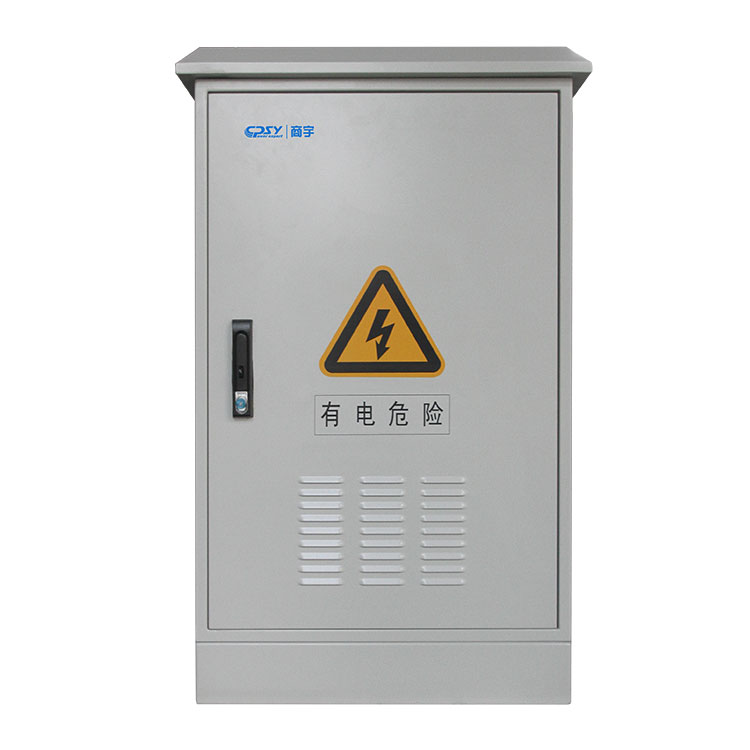
A CPSY® outdoor container data center solution places server racks, UPS systems, batteries, power distribution, cooling, environmental monitoring, access control, cameras, leak detection, and related safety systems inside a configurable outdoor enclosure. The equipment is integrated before delivery, reducing the amount of assembly required at an edge or remote site.
This approach is useful when constructing a conventional data center room would take too long, cost too much, or expose equipment to an unsuitable operating environment. It also creates a defined expansion unit: capacity can be added through another module rather than a large building retrofit. Factory integration does not eliminate site engineering, though. Utility service, foundations, cable routes, drainage, fire protection, communications, and local approvals still have to be resolved before installation. Review the available outdoor container data center solution as a configurable platform, not a fixed off-the-shelf box.
Configuration Matrix: Footprint, Rack Capacity, IT Load, UPS, Runtime, Cooling, and Redundancy
| Design item | Published CPSY range or option | What must be confirmed |
|---|---|---|
| Enclosure and racks | Up to 48 cabinets per module | Container footprint, rack dimensions, aisle arrangement, service clearance, floor loading, and future expansion |
| Module power | Up to 180 kW | Actual IT load, cooling and auxiliary demand, utility capacity, startup conditions, and usable redundancy |
| UPS | 80–300 kVA | Input and output voltage, 60 Hz compatibility, power factor, bypass arrangement, battery runtime, and N, N+1, or other architecture |
| Inter-row cooling | 13–40 kW | Rack density, airflow path, outdoor design temperature, humidity control, refrigerant arrangement, and standby capacity |
| Room-level cooling | 8–102 kW | Total sensible load, air distribution, hot- or cold-aisle containment, maintenance access, and low-load operation |
| Operating environment | -30°C to 45°C | Site extremes, solar exposure, dust, precipitation, corrosion risk, and required derating above 1,000 meters |
Confirm 20-Foot, 40-Foot, or Project-Specific Enclosures Against Rack Count, Service Clearance, and Expansion Plans
Do not choose a 20-foot or 40-foot enclosure from rack count alone. UPS cabinets, battery strings, cooling units, switchgear, fire equipment, and clear working space consume usable floor area. Door swing, equipment replacement paths, and exterior condenser access matter too. A smaller container may reduce shipping and site work, but it can make battery or cooling maintenance awkward. Project-specific enclosures may be the better choice when rack depth, cable entry, redundancy, or local transport limits do not fit a standard footprint.
Combine Up to 48 Cabinets and 180 kW Module Power with 80–300 kVA UPS and Inter-Row or Room-Level Cooling
The maximum values are not automatically available in one configuration. Cabinet quantity, module power, UPS capacity, battery runtime, and cooling duty interact. Forty-eight lightly loaded cabinets present a different airflow problem from a smaller group of high-density racks. Inter-row cooling places capacity close to the heat source and can improve airflow control; room-level units may be simpler for lower, more uniform rack loads. Enclosed hot or cold aisles help prevent supply and return air from mixing, but containment must be coordinated with doors, fire detection, suppression, and emergency procedures.
Each Site Is Engineered Around Rack Density, Utility Power, Battery Runtime, Climate, Altitude, and Service Access
A reliable proposal starts with rack-by-rack load data rather than a single headline capacity. CPSY needs the utility voltage and frequency, expected load growth, acceptable downtime, battery autonomy target, ambient temperature range, humidity, dust exposure, altitude, communications interface, and preferred redundancy. Above 1,000 meters, published guidance calls for derating; the required adjustment must be established during engineering.
Service access is commonly overlooked. Technicians need safe clearance to isolate UPS modules, replace batteries, clean heat exchangers, remove filters, and reach distribution equipment without interrupting live racks. Ask how failed cooling or power components leave the enclosure and whether a crane, special lifting equipment, or shutdown will be required.
Separate the Outdoor Enclosure Rating from IP20 Internal Equipment and Reconcile 1,000 kg and 1,800 kg Load Claims with Configuration-Specific Structural Drawings
An outdoor enclosure rating does not make every internal component weatherproof. If a subsystem is listed as IP20, it is intended for protection inside the conditioned enclosure; it should not be treated as exposed outdoor equipment. Request separate documentation for the shell, doors, penetrations, roof, cable entries, cooling interfaces, and internal devices.
Likewise, 1,000 kg and 1,800 kg load figures should not be used interchangeably or assumed to apply to every rack, floor area, or shipping condition. Ask CPSY to identify what each figure describes and provide configuration-specific structural drawings. Those drawings should show equipment weights, load distribution, lifting points, anchorage, foundation reactions, and transport restrictions.
U.S. Projects Require Verified 60 Hz Electrical Designs, NEC Coordination, NRTL Documentation, Permitting, Fire Protection, and Wind or Seismic Review
Equipment intended for another market should not be specified for a U.S. project without review. Confirm a 60 Hz electrical design, nominal and allowable voltage, grounding method, available fault current, overcurrent protection, disconnects, conductor entry, working clearances, and emergency shutdown requirements. The engineer of record and authority having jurisdiction should determine the applicable NEC edition and local amendments.
Permitting may also require stamped structural documents, wind or seismic anchorage, fire detection and suppression plans, battery hazard review, accessibility provisions, and evidence for listed components. Requirements vary by state, municipality, battery chemistry, occupancy, and placement. A factory-built module can shorten field assembly, but it does not bypass plan review or inspection.
Document Applicable Certifications by Product or Subsystem—Including UL, FCC, CE, RoHS, or ISO Evidence Where Relevant—Without Implying Unverified System-Level Approval
Ask for certificates, test reports, listing files, model numbers, and issuing bodies for the exact proposed equipment. UL or another NRTL mark on a UPS component does not establish a listing for the complete containerized data center. CE and RoHS documents may support procurement requirements, but they do not replace U.S. electrical approval. FCC evidence should be tied to equipment for which radio-frequency compliance applies, while ISO certificates describe a management system and not product safety. Any system-level approval must be stated only when documentation covers the assembled configuration.
Match the Container to Remote Edge Sites, Telecom Networks, Industrial Operations, Public Infrastructure, and AI Inference Workloads
A containerized edge data center can support telecom aggregation, remote industrial control, transportation systems, utility sites, government services, medical or research operations, and local processing where latency or service continuity matters. These uses are not interchangeable.
- Remote sites: prioritize maintainability, remote alarms, spare parts, communications resilience, and access during severe weather.
- Telecom networks: verify DC and AC interfaces, battery autonomy, grounding, network demarcation, and staged expansion.
- Industrial operations: assess dust, corrosive contaminants, vibration, electromagnetic conditions, and integration with site safety procedures.
- Public infrastructure: establish permitting responsibility, physical security, camera retention, access records, and emergency response.
- AI inference: provide rack-level power and heat data. High-density accelerators can exceed assumptions based on conventional servers, so the 180 kW module limit and selected cooling architecture must be checked against the actual hardware.
Containerized Data Center FAQs and RFQ Checklist: Site Location, IT Load, Racks, Voltage, Runtime, Cooling, Redundancy, Environmental Conditions, Codes, Commissioning, Warranty, and Project Evidence
- How quickly can a containerized data center be deployed?
- Lead time depends on the approved configuration, equipment availability, factory testing, shipping route, site readiness, permitting, and commissioning scope. Request a project schedule tied to defined milestones rather than a generic deployment claim.
- Can capacity be expanded later?
- Yes, the modular concept supports expansion, but you should reserve utility power, foundation space, cable routes, cooling interfaces, and network capacity during the initial design.
- What should be included in an RFQ?
- Provide the site address and altitude; rack quantity, dimensions, and load; utility voltage and frequency; UPS topology; required runtime; cooling preference; redundancy target; temperature, humidity, dust, and corrosion conditions; applicable codes; fire strategy; commissioning tests; warranty expectations; training needs; and required certification or project-reference evidence.
- What testing should be requested?
- Define factory and site acceptance tests covering power transfer, UPS operation, cooling, alarms, sensors, access control, cameras, leak detection, communications, and failure responses. Test criteria should match the approved design and operating sequence.
Send those project inputs with your request for an engineered outdoor modular data center proposal. CPSY can then confirm the enclosure, cabinet layout, power path, cooling arrangement, environmental limits, documentation, and commissioning scope for the actual site.