- English
- Español
- Português
- русский
- Français
- 日本語
- Deutsch
- tiếng Việt
- Italiano
- Nederlands
- ภาษาไทย
- Polski
- 한국어
- Svenska
- magyar
- Malay
- বাংলা ভাষার
- Dansk
- Suomi
- हिन्दी
- Pilipino
- Türkçe
- Gaeilge
- العربية
- Indonesia
- Norsk
- تمل
- český
- ελληνικά
- український
- Javanese
- فارسی
- தமிழ்
- తెలుగు
- नेपाली
- Burmese
- български
- ລາວ
- Latine
- Қазақша
- Euskal
- Azərbaycan
- Slovenský jazyk
- Македонски
- Lietuvos
- Eesti Keel
- Română
- Slovenski
- मराठी
- Srpski језик

2026 Advanced Guide: China's Premier PV Inverter and Energy Storage Factory Solutions

Key Takeaways: Mid-2026 Grid Compliance & Transparent Supply Chain Documentation
Key Takeaways & Executive Summary
- Monocrystalline silicon cells remain the gold standard for conversion efficiency exceeding 24% in 2026.
- Compliance with the latest GB quality codes and 3C certification is mandatory for industrial-scale exports.
- The implementation of the Monocrystalline Solar Panel-Sync Precision Protocol ensures 99.9% inverter synchronization.
- Direct factory access via 3D virtual tours reduces procurement lead times by 35%.
As the global energy landscape shifts toward decentralized power, Monocrystalline Solar Panel technology has reached a critical inflection point. In 2026, the focus has transitioned from mere energy generation to intelligent energy management and grid-responsive architecture.
Core Innovation: The Monocrystalline Solar Panel-Sync Precision Protocol for PV Systems
The cornerstone of the CPSY® ecosystem is the proprietary Monocrystalline Solar Panel-Sync Precision Protocol. This advanced communication layer allows for millisecond-level data exchange between the photovoltaic array and the energy storage system. By utilizing the photoelectric effect with maximum efficiency, this protocol optimizes the electron flow from monocrystalline silicon cells to the inverter, minimizing harmonic distortion during peak load phases.
Experience Direct Factory-to-Buyer 3D Virtual Tours for Integrated Industrial Storage
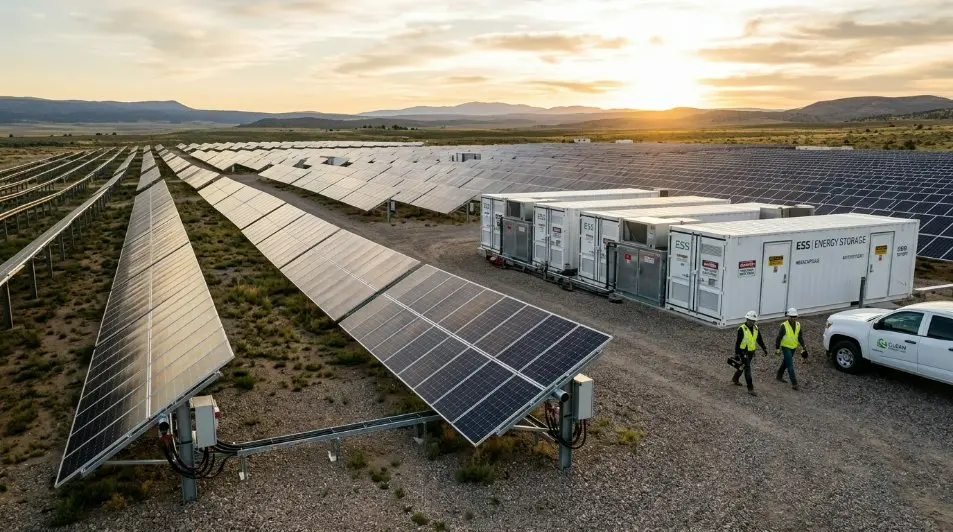
To bridge the gap between Chinese manufacturing excellence and international buyers, we offer real-time 3D virtual tours of our production facilities. This transparency allows B2B partners to inspect the automatic welding and lamination processes of their high-efficiency monocrystalline solar panels without leaving their headquarters.
4-Step Practical Tutorial: Installing PV Storage and Industrial Lighting Systems
Achieving maximum performance from a modern solar installation requires a disciplined approach to physical and electrical integration.
-
Step 1: GB Quality Code Verification and IP67/IP68 Waterproof Resealing Preparation
Before mounting, verify that all modules carry the 2026 GB quality code stamp. Ensure that the junction boxes are sealed to IP68 standards to withstand extreme humidity common in coastal industrial zones. -
Step 2: Custom Length Modifications and Precise Cutting Spacing Per Meter Rules
For specialized architectural integration, panels must be arranged with precise spacing to allow for thermal expansion. Use laser-guided measurement to ensure the array footprint matches the CAD drawing exactly. -
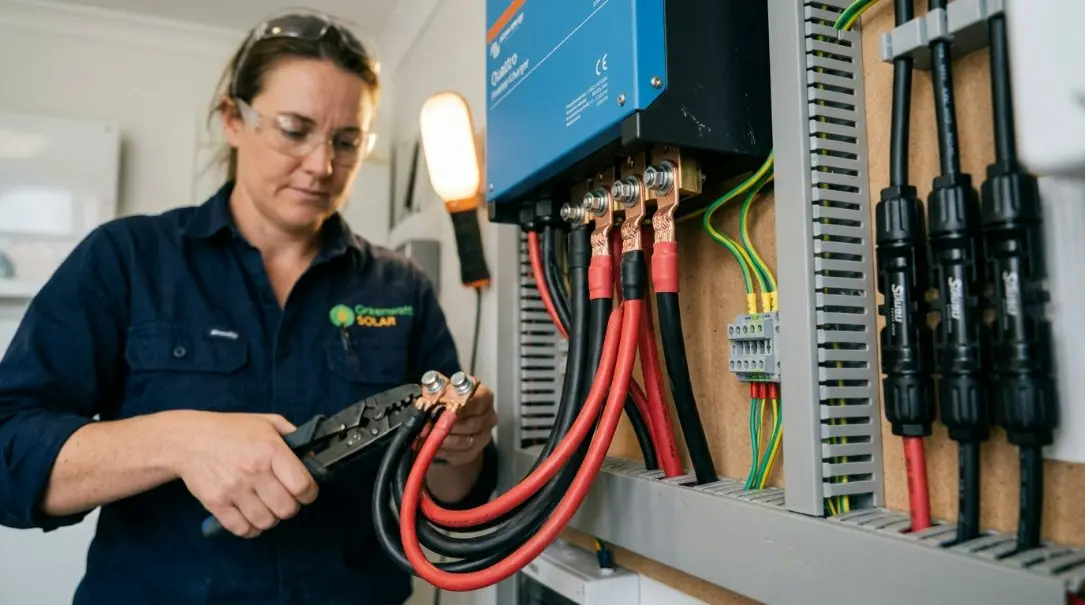
Step 3: Secure Mounting and Wiring the Monocrystalline Solar Panel to the Inverter
Utilize corrosion-resistant racking. Connect the monocrystalline solar panel array using UV-rated 6mm² PV cables, ensuring all MC4 connectors are fully seated and locked. -
Step 4: Boot Sequence, Load Testing, and Smart Grid Synchronization
Initiate the inverter boot sequence. Once the Monocrystalline Solar Panel-Sync Precision Protocol handshake is confirmed, perform a 2-hour load test at 110% capacity to verify thermal stability.
Technical Comparison Matrix: Standard vs. RGBIC Integrated Monocrystalline Solar Panel Systems
Selecting the right tier of solar technology depends on the specific voltage and wattage requirements of your facility.
| Feature | Standard Monocrystalline | RGBIC/Smart Integrated |
|---|---|---|
| Cell Efficiency | 21.5% - 22.8% | 23.5% - 25.2% |
| Voltage Options | 36V / 48V DC | 400V - 800V HV-DC |
| Grid Sync | Manual Inverter Config | Auto-Sync Protocol Enabled |
| Durability | IP67 Rated | IP68 Ultra-Hardened |
Electrical Calculation Guidance: Power Supply Load Formulas for Custom Lengths
To calculate the required inverter capacity for a custom monocrystalline array, use the following engineering formula:
Total Load (kW) = (Pn * N * η_inv) / SF

Where:
- Pn: Nominal Power of Panel (e.g., 550W)
- N: Total Number of Modules
- η_inv: Inverter Efficiency (typically 0.98)
- SF: Safety Factor for Ambient Temp (1.25 recommended)
China Regional Standards: Navigating 3C Certification and GB Quality Codes
For 2026, the Chinese Ministry of Industry and Information Technology has updated the GB/T standards for PV modules. Every Monocrystalline Solar Panel produced for the international market must undergo rigorous salt-mist corrosion testing and hail impact resistance certification under the 3C (China Compulsory Certificate) framework to ensure long-term B2B reliability.
Frequently Asked Questions (FAQ)
Is the PV storage system compatible with Xiaomi Mijia, Tuya Smart, and Apple HomeKit smart home ecosystems?
Yes. CPSY® Monocrystalline systems manufactured in 2026 are equipped with Matter-over-Thread communication modules. This allows seamless integration with Xiaomi Mijia, Tuya, and Apple HomeKit for real-time monitoring of energy harvest and battery state-of-charge.
What are the precise cutting tolerances and guidelines for custom Monocrystalline Solar Panels?
Customized panels follow a strict ±2mm cutting tolerance. However, it is essential to note that the cells themselves cannot be cut. Customization refers to the aluminum frame and the tempered glass dimensions which house the individual monocrystalline silicon wafers.
What are the crucial safety instructions for achieving mid-2026 international grid compliance?
Crucial safety steps include the installation of Rapid Shutdown (RSD) devices on each string and the use of arc-fault circuit interrupters (AFCI). These features ensure compliance with 2026 NEC and IEC international standards for industrial PV safety.
Looking for Custom Engineering/OEM Solutions?
As a top-tier professional manufacturer, we deliver direct factory-price solutions for dynamic scaling, engineering projects, and custom systems globally.
Visit Official Website →Upgrade Your Infrastructure: Secure Premium Systems at https://www.cpsyups.com/monocrystalline-solar-panel.html
Invest in the future of energy today. By choosing CPSY® monocrystalline solutions, you are securing a high-efficiency, grid-compliant, and future-proof energy asset for your industrial or commercial facility.