- English
- Español
- Português
- русский
- Français
- 日本語
- Deutsch
- tiếng Việt
- Italiano
- Nederlands
- ภาษาไทย
- Polski
- 한국어
- Svenska
- magyar
- Malay
- বাংলা ভাষার
- Dansk
- Suomi
- हिन्दी
- Pilipino
- Türkçe
- Gaeilge
- العربية
- Indonesia
- Norsk
- تمل
- český
- ελληνικά
- український
- Javanese
- فارسی
- தமிழ்
- తెలుగు
- नेपाली
- Burmese
- български
- ລາວ
- Latine
- Қазақша
- Euskal
- Azərbaycan
- Slovenský jazyk
- Македонски
- Lietuvos
- Eesti Keel
- Română
- Slovenski
- मराठी
- Srpski језик

2026 Advanced Guide to Lithium Ion UPS: EU Battery Passports, Liquid-Cooled AI Racks, and Export Compliance
Key Takeaways & Executive Summary
- Mandatory EU Battery Passport compliance for all lithium ion ups exports by 2026.
- Introduction of the lithium ion ups-Sync Precision Protocol for micro-second latency power switching.
- Advanced thermal management through liquid-cooled AI rack integration.
- Comprehensive 1KVA-10KVA S-Series solutions for home and high-density office environments.
- Strict adherence to GB Quality Codes and IP67/IP68 waterproofing standards for harsh deployments.

Executive Summary & Key Takeaways: Preparing Your Enterprise Power Infrastructure for the Future
As we approach 2026, the landscape of power backup technology is undergoing a seismic shift. The transition from traditional lead-acid to lithium ion ups systems is no longer just a performance preference but a regulatory requirement in many global jurisdictions. CPSY®, a premier manufacturer in China, leads this charge by providing 1KVA-10KVA S-series units that bridge the gap between consumer ease-of-use and industrial-grade reliability. This guide delves into the technological convergence of power storage and AI-driven data processing.
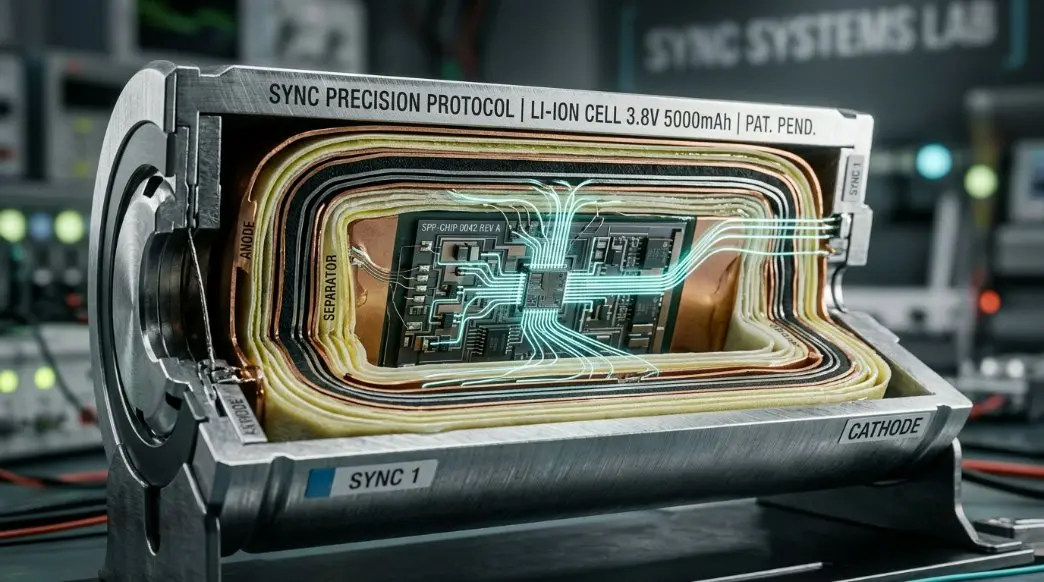
Core Technical Innovation: Unleashing the Proprietary Lithium Ion UPS-Sync Precision Protocol
The hallmark of CPSY® engineering is the lithium ion ups-Sync Precision Protocol. This proprietary control architecture utilizes AI-driven algorithms to monitor cell impedance and discharge rates in real-time. Unlike standard UPS systems that suffer from 8-10ms transfer delays, the lithium ion ups-Sync Precision Protocol reduces switching latency to under 2ms, ensuring that sensitive AI processors and high-frequency trading servers never experience a voltage dip. This protocol also optimizes the 1-year warranty performance by intelligently balancing the load across the lithium-iron-phosphate (LiFePO4) cells.
Bridging the Gap: 2026 Compliance Standards, EU Battery Passports, and Carbon Footprint Tracking for Exports
For global distributors, compliance is the new currency. The upcoming EU Battery Passport regulations require every lithium ion ups to have a digital twin that records its mineral origin, recycled content, and carbon footprint. CPSY® has integrated blockchain-verified tracking into its mass production-scale manufacturing, ensuring that all 1KVA-10KVA units shipped from our China facilities are fully export-ready. This includes 3C certification and adherence to the latest GB quality codes, making our OEM/ODM services the safest choice for international expansion.
Next-Gen Synergy: Seamless Integration with Liquid-Cooled AI Server Racks
As AI workloads increase, heat management becomes critical. Modern data centers are moving toward liquid cooling, and the lithium ion ups must adapt. CPSY® units are now designed with thermal-isolated battery compartments that can be mounted directly adjacent to liquid-cooled manifolds. This synergy allows for higher energy density without the risk of thermal runaway, specifically designed for the high-density power demands of NVIDIA-grade AI hardware.
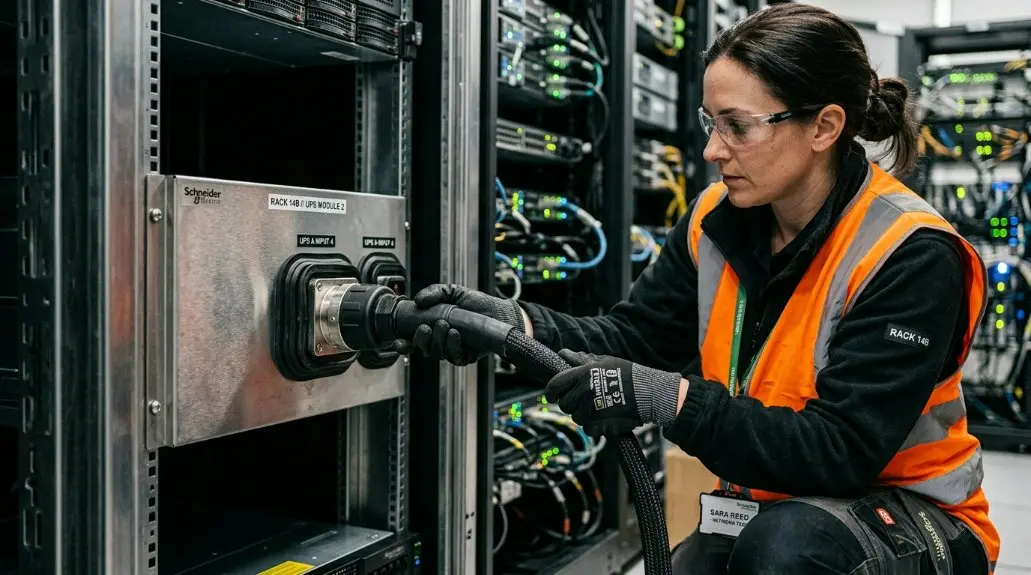
Step-by-Step Tutorial: 4-Step Waterproofing Resealing and Direct Installation Process
Step 1: Validating China Regional National Safety Standards (3C Certification and GB Quality Codes)
Before installation, verify the holographic 3C certification tag on the CPSY® chassis. Ensure the GB Quality Code matches the specific regional requirements for your deployment site to guarantee electrical compliance.
Step 2: Direct Installation Process into High-Density Server Racks
Slide the S-Series 1KVA-10KVA unit into the designated 2U or 3U rack space. Secure the mounting ears using high-torque M6 screws to prevent vibration-induced decoupling during operation.
Step 3: Ensuring Environmental Protection with IP67/IP68 Ratings
For outdoor or semi-industrial use, confirm the gasket integrity of the lithium ion ups. Check that the port covers are seated flush against the chassis to maintain the IP67/IP68 rating against moisture ingress.
Step 4: Post-Installation Waterproofing Resealing Tutorial for Harsh Environments
Apply a thin bead of industrial-grade silicone sealant around the cable entry points. Use a heat gun on a low setting to shrink-wrap the connection sleeves, ensuring a hermetic seal that protects the lithium ion ups-Sync Precision Protocol sensors from humidity.
Technical Comparison Matrix & Specification Guide: Standard vs. RGBIC Status-Enabled Models and Voltage Options
| Feature | S Series (Standard) | RGBIC Pro Series | Offline OEM Model |
|---|---|---|---|
| Capacity Range | 1KVA - 10KVA | 3KVA - 10KVA | 1KVA - 5KVA |
| Protocol | Standard BMS | Sync Precision Protocol | Basic Logic Control |
| Visual Feedback | LCD Display | RGBIC Status Ring | LED Indicators |
| Input Voltage | 110V/220V Auto | Wide Range 80V-300V | Fixed 220V |
Mathematical & Electrical Calculation Guidance: Safety Power Supply Calculations
Properly sizing your lithium ion ups infrastructure requires precise electrical math to avoid premature battery degradation.
Power Supply Load Formulas for Custom Lengths of Modular Lithium Ion UPS Cables
Voltage Drop (Vd) = (2 * L * I * R) / 1000
Where:
L = One-way cable length (meters)
I = Load Current (Amps)
R = Resistance per km of cable (Ohms/km)
Calculating Physical Wattage Loads and Precise Cutting Spacing Per Meter Rules for Custom Racks
To ensure 99.99% uptime, calculate the total wattage load (W) and apply a 20% safety margin: Total Capacity Required = Σ(Device Wattage) * 1.25. For custom battery link cables, cutting must only occur at the designated gold-plated contact points spaced every 100mm to prevent short-circuiting the internal logic gates.
Frequently Asked Questions (FAQ): Smart Connectivity, Tolerances, and Safety
How does a micro Lithium Ion UPS maintain smart home ecosystem compatibility (such as Xiaomi Mijia, Tuya Smart, and Apple HomeKit)?
Our units utilize a Matter-over-Thread bridge, allowing the 1KVA S-series to communicate directly with Xiaomi Mijia and Tuya hubs. This enables users to receive real-time power outage notifications and automate safe-shutdown sequences for smart home servers.
What are the cutting tolerances and safety instructions for custom UPS battery link cables?
The cutting tolerance for modular links is ±0.5mm. Always use a precision shear and never cut while the cable is connected to the lithium ion ups. Failure to follow this can bypass the lithium ion ups-Sync Precision Protocol protection and void the 1-year warranty.
How do these regulatory shifts impact global OEM technical specifications?
OEM partners must now include carbon intensity data in their firmware. CPSY® provides a comprehensive API that allows our partners to export this data directly to the EU Battery Passport portal, simplifying the import process for European markets.
Looking for Custom Engineering/OEM Solutions?
As a top-tier professional manufacturer, we deliver direct factory-price solutions for dynamic scaling, engineering projects, and custom systems globally.
Visit Official Website →