- English
- Español
- Português
- русский
- Français
- 日本語
- Deutsch
- tiếng Việt
- Italiano
- Nederlands
- ภาษาไทย
- Polski
- 한국어
- Svenska
- magyar
- Malay
- বাংলা ভাষার
- Dansk
- Suomi
- हिन्दी
- Pilipino
- Türkçe
- Gaeilge
- العربية
- Indonesia
- Norsk
- تمل
- český
- ελληνικά
- український
- Javanese
- فارسی
- தமிழ்
- తెలుగు
- नेपाली
- Burmese
- български
- ລາວ
- Latine
- Қазақша
- Euskal
- Azərbaycan
- Slovenský jazyk
- Македонски
- Lietuvos
- Eesti Keel
- Română
- Slovenski
- मराठी
- Srpski језик

What Battery Storage Cabinet Do You Need for a UPS or Solar System?
The right battery storage cabinet is determined first by the battery arrangement and site conditions, not by cabinet appearance. For a UPS, solar, telecom, or industrial installation, confirm the battery type, Ah rating, quantity, dimensions, total weight, access requirements, ventilation, and environmental exposure before selecting a cabinet.
CPSY offers C-1 through C-40 and CD battery cabinet models for battery ratings listed from 17Ah to 250Ah. Options include aluminum construction, a proprietary fire-resistant lining that can be customized to your needs, IP54 protection, door locks, casters, cooling fans, and custom waterproof or Zone 4 seismic configurations. Review the CPSY battery storage cabinet range with your actual battery datasheets rather than choosing from nominal capacity alone.
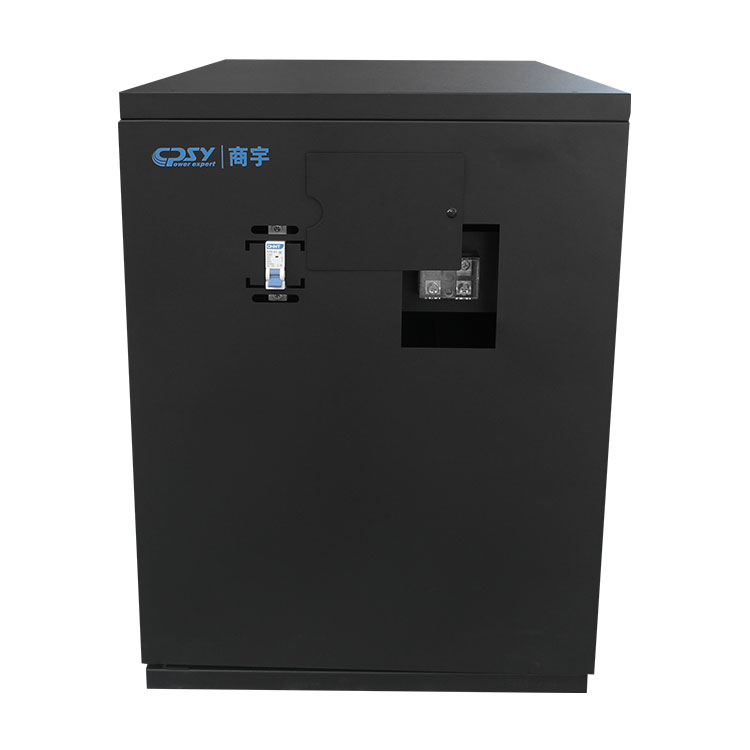
Start with the battery arrangement, site location, and required protection level
Start by listing every battery that must fit inside the cabinet, along with its dimensions, terminal position, interconnect arrangement, and weight. The usable interior must accommodate cable routing and service access; a cabinet that technically holds the batteries but leaves no room to inspect terminals is a poor fit.
Standard indoor cabinets versus customized waterproof configurations
A standard indoor cabinet may be suitable for a controlled electrical room, while a site exposed to dust, moisture, washdown, or temperature swings may require a different enclosure specification. CPSY battery storage cabinets can be customized for waterproof requirements, and the range includes cabinets with an IP54 protection rating. IP54 helps limit dust ingress and protects against water splashes, but it does not mean the cabinet can be submerged or exposed to unrestricted outdoor weather without further design review.
Ask CPSY to confirm the final ingress-protection arrangement, door seals, cable-entry treatment, and installation orientation. Those details matter more than the IP number printed on a product sheet.
The first decisions for U.S. UPS, solar, telecom, and industrial projects
Use the operating application to define the brief:
- UPS systems: match the cabinet to the UPS battery string, service clearance, cable exit direction, and the battery manufacturer's installation requirements.
- Solar energy storage: confirm whether the cabinet houses VRLA batteries or another battery chemistry, and whether the location needs added weather protection, monitoring, or cooling.
- Telecommunications: prioritize footprint, cable access, secure doors, and compatibility with the equipment rack or power system already on site.
- Industrial rooms: check floor loading, forklift or pallet access, corrosive contaminants, ambient temperature, and the required maintenance route.
For U.S. projects, the cabinet also needs to fit the site's electrical, fire, seismic, and authority-having-jurisdiction requirements. CPSY can provide project-specific information for review; do not treat a general cabinet description as approval for a particular installation.
Match CPSY C and CD cabinet models to battery quantity and dimensions
Choose among the C and CD families only after comparing the battery count, battery size, internal layout, and static load. The model number alone does not establish that a cabinet will accept your battery bank.
Use the model-selection table to compare VRLA capacities from 17Ah to 250Ah
| Cabinet family or listing | Battery information to compare | Best selection question |
|---|---|---|
| C-1 through C-40 | Listed configurations for multiple battery counts and battery ratings from 17Ah to 250Ah | Which C model provides the required internal dimensions, quantity, cable path, and service clearance? |
| CD models | Listed configurations for selected battery combinations and cabinet dimensions | Does the CD arrangement match the battery layout and the available floor or rack space? |
| Higher-load configurations | Some listed configurations have static-load capacities in the 800–1,500 kg range | What is the exact rated load for the selected model, and can the floor support the fully loaded cabinet? |
VRLA AGM and GEL batteries are commonly selected for UPS and communications installations, but the battery manufacturer remains the authority for spacing, orientation, charging, ventilation, and service requirements. Compare the cabinet's internal dimensions with the complete battery assembly, not just the Ah rating. Two batteries with the same nominal capacity can differ in height, terminal location, and cable clearance.
For a practical starting point, send CPSY the battery make, model, Ah rating, quantity, dimensions, and total weight. The supplier can then identify the closest C or CD configuration and confirm what must be customized.
Specify access, cooling, and installation details for the actual battery system
Access and heat management are installation decisions, not accessories to consider after purchase. A cabinet may fit on paper and still be difficult to maintain if the door swing, removable panels, cable entry, or airflow conflicts with the room.
Door locks, casters, removable panels, ventilation, and optional cooling fans
CPSY cabinets can be specified with optional door locks, casters, fans, and other configuration choices. A lock can control routine access, but confirm the site's emergency access and maintenance policy before selecting the hardware. Casters may help during positioning, yet they do not remove the need to verify the final static load and floor condition.
Cooling requirements depend on the batteries, charging profile, ambient temperature, cabinet layout, and room ventilation. An optional fan may be appropriate where the design calls for forced airflow, but adding a fan without a defined intake, exhaust, filtration, and maintenance plan can introduce dust or reduce the intended enclosure protection. Ask for the airflow arrangement and fan power requirements as part of the drawing package.
Choose IP protection, materials, and Zone 4 reinforcement for the installation environment
CPSY battery storage cabinets use aluminum construction and can be lined with a proprietary fire-resistant lining customized to the project. Confirm the lining material, thickness, coverage, mounting method, and any temperature or battery-chemistry limitations in the final specification. “Fire-resistant” should describe a documented construction detail, not replace the site's fire-protection review.
For harsh environments, the listed IP54 protection can help address dust and splashing water. For earthquake-prone locations, CPSY can customize cabinets to meet Zone 4 seismic requirements. Request the anchoring points, reinforcement details, loaded-cabinet basis, and any test or engineering documentation needed by the project. Seismic suitability depends on the complete installed system, including the floor, anchors, cabinet, and battery mass.
Request configuration-specific drawings, load data, coating details, and compliance documents
A serious quotation should identify the exact cabinet configuration. Ask for a dimensioned drawing showing internal clearances, door swing, panels, cable entries, ventilation, battery positions, and mounting points. Request the rated static load for that model, material and coating details, lining specification, lock and caster options, and the proposed IP54 or waterproof arrangement.
For U.S. review, also request the compliance and quality documents applicable to the quoted product and project. CPSY identifies itself as a China-based UPS and battery manufacturer with R&D, production facilities, OEM/ODM experience, CE and other stated certifications, and ISO-related quality claims. The documents supplied for your order should be checked against the exact cabinet, not assumed from the company profile.
Send CPSY the information needed for a U.S. cabinet quotation
To reduce back-and-forth, send CPSY a short project brief containing:
- Battery chemistry, manufacturer, model, Ah rating, quantity, and dimensions.
- UPS, solar, telecom, or industrial application and the equipment the cabinet must connect to.
- Room or outdoor location, ambient conditions, moisture or dust exposure, and required IP protection.
- Required cabinet footprint, access direction, cable-entry location, and service clearance.
- Fully loaded weight, floor information, caster requirements, and any Zone 4 seismic requirement.
- Door-lock, fan, ventilation, waterproofing, lining, color, coating, and OEM matching preferences.
- Required drawings, load data, certifications, and delivery or after-sales documentation.
With those details, CPSY can assess the C or CD family, identify a standard configuration where one fits, and separate confirmed specifications from items requiring customization. Start your request through the battery cabinet product page, or send CPSY your battery datasheets for a configuration-specific quotation.